Formula 1mpossible
A racing game that turns the gender gap in research into an experience.
We built an interactive racing game designed to expose gender bias in research and healthcare data. Players experienced unequal game mechanics inspired by real-world inequalities faced by women.
Overview
This project was part of the course Science to Experience. The goal of the course was to communicate a (scientific) insight through an experience instead of through writing. Students hosted a public exhibition to present their work. Our project was presented at the Media Technology Exhibition at the V2_ Lab for the Unstable Media. The general theme of the exhibition was "Living". Together with Sanne Dekker and Yanna Smid, we decided to discuss a certain aspect of life as a woman.
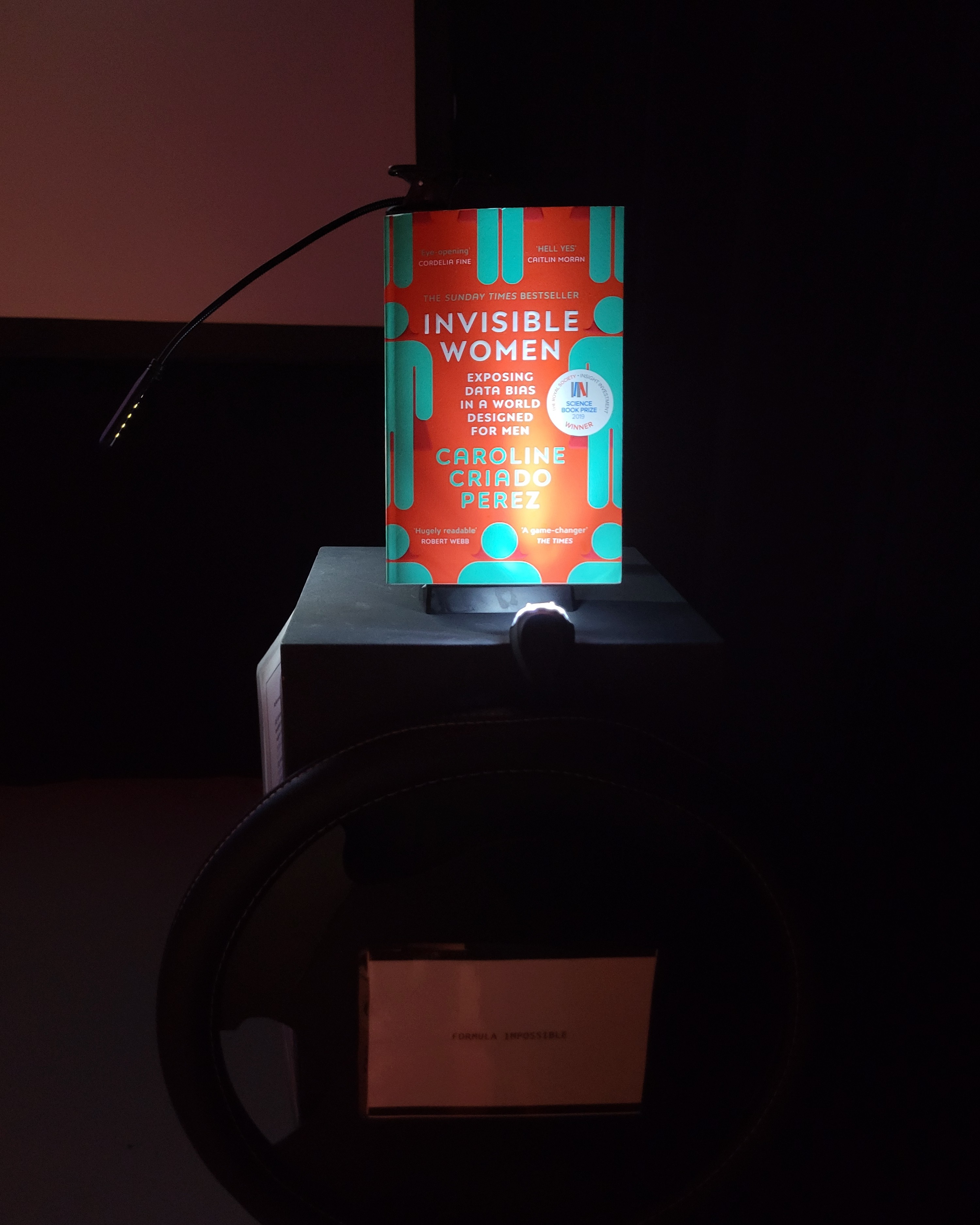
Our project focused on gender bias in research. Inspired by "Invisible Women" by Caroline Criado Perez, we looked into how women are often excluded from research because of hormonal complexity and higher costs. We learned that this exclusion has serious consequences for medicine, car safety, and more. This led us to our statement: Women are overly complex. The goal was to provoke discussion about why women are often left out of research and why this must change.
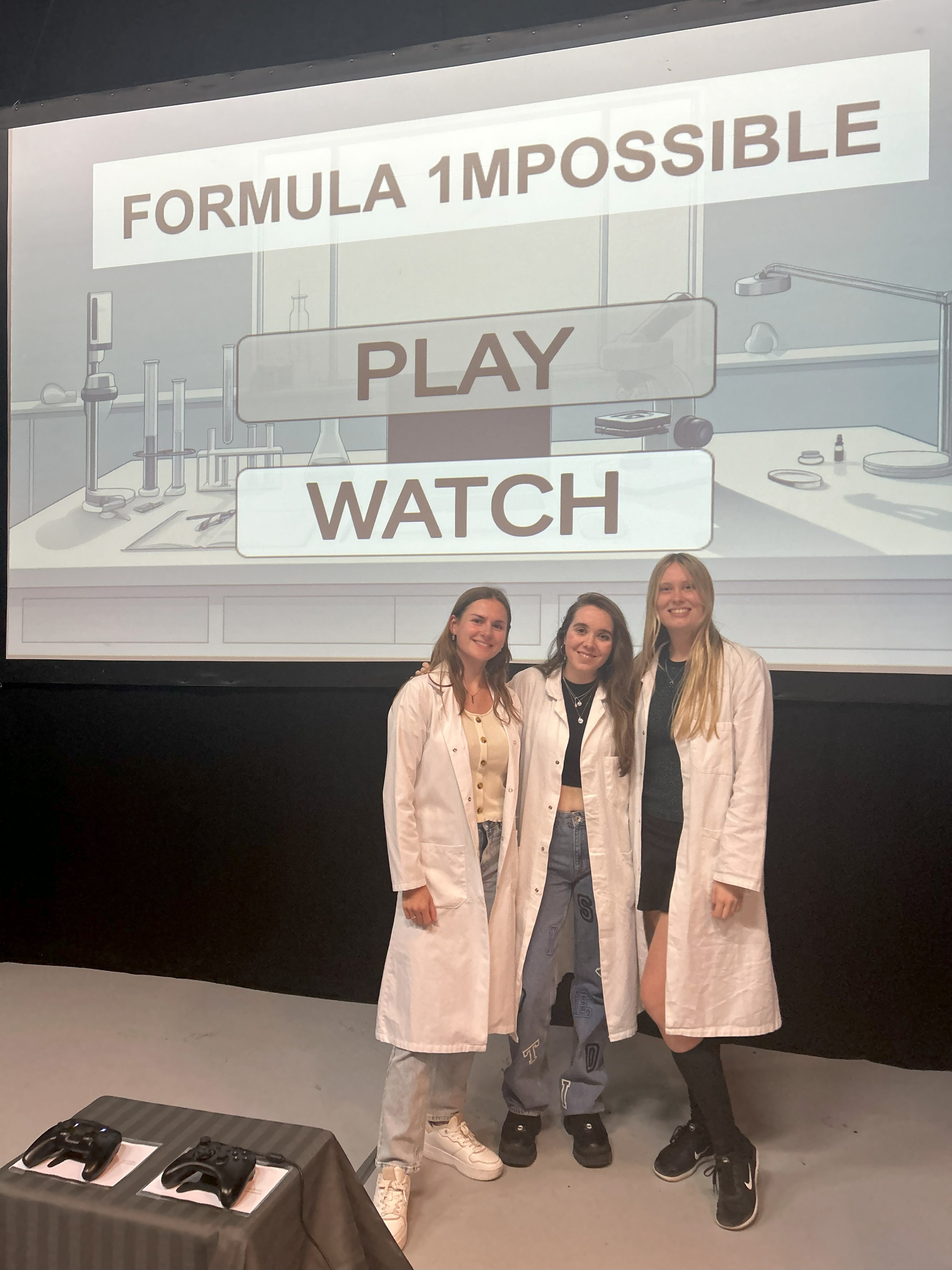
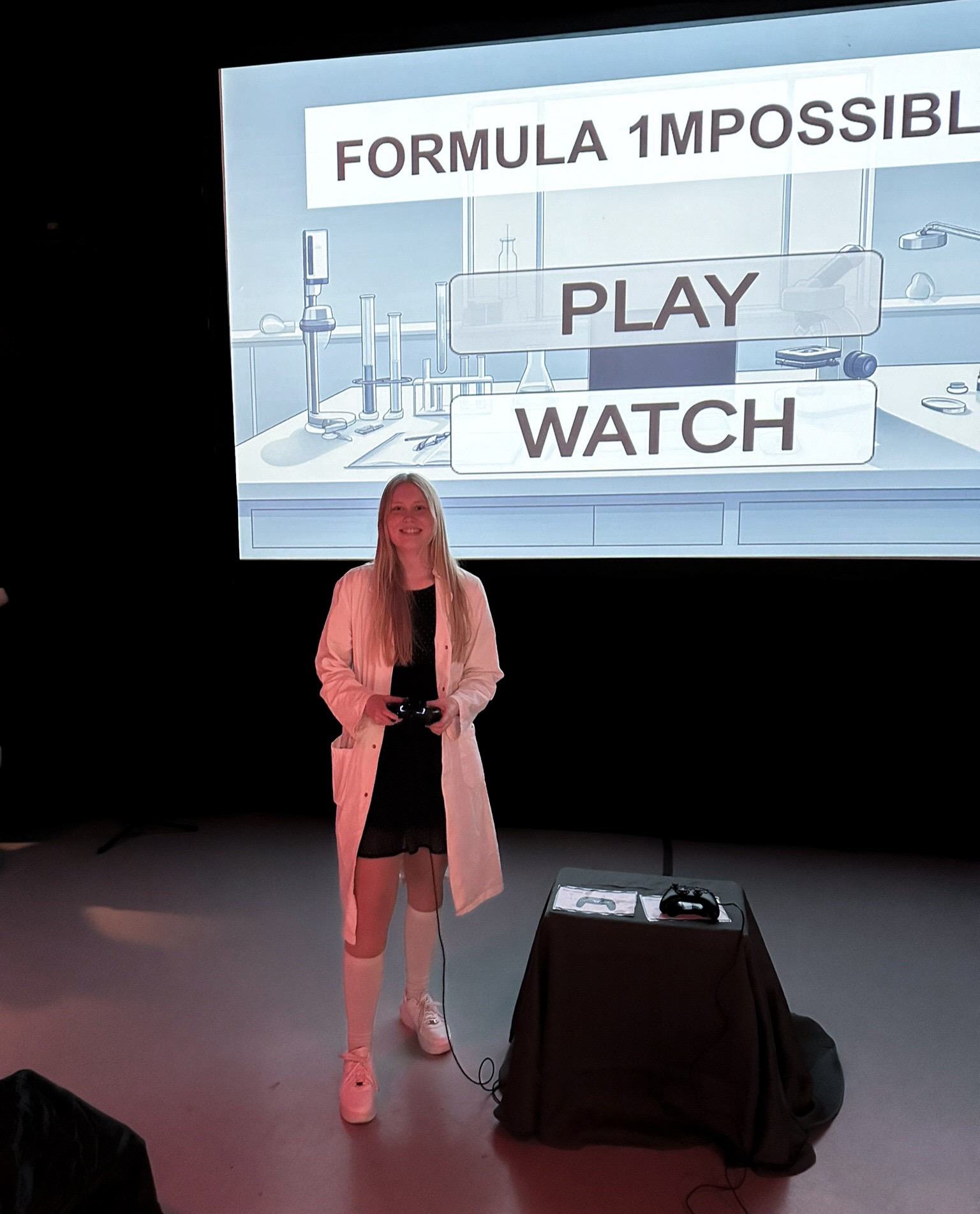
The Project
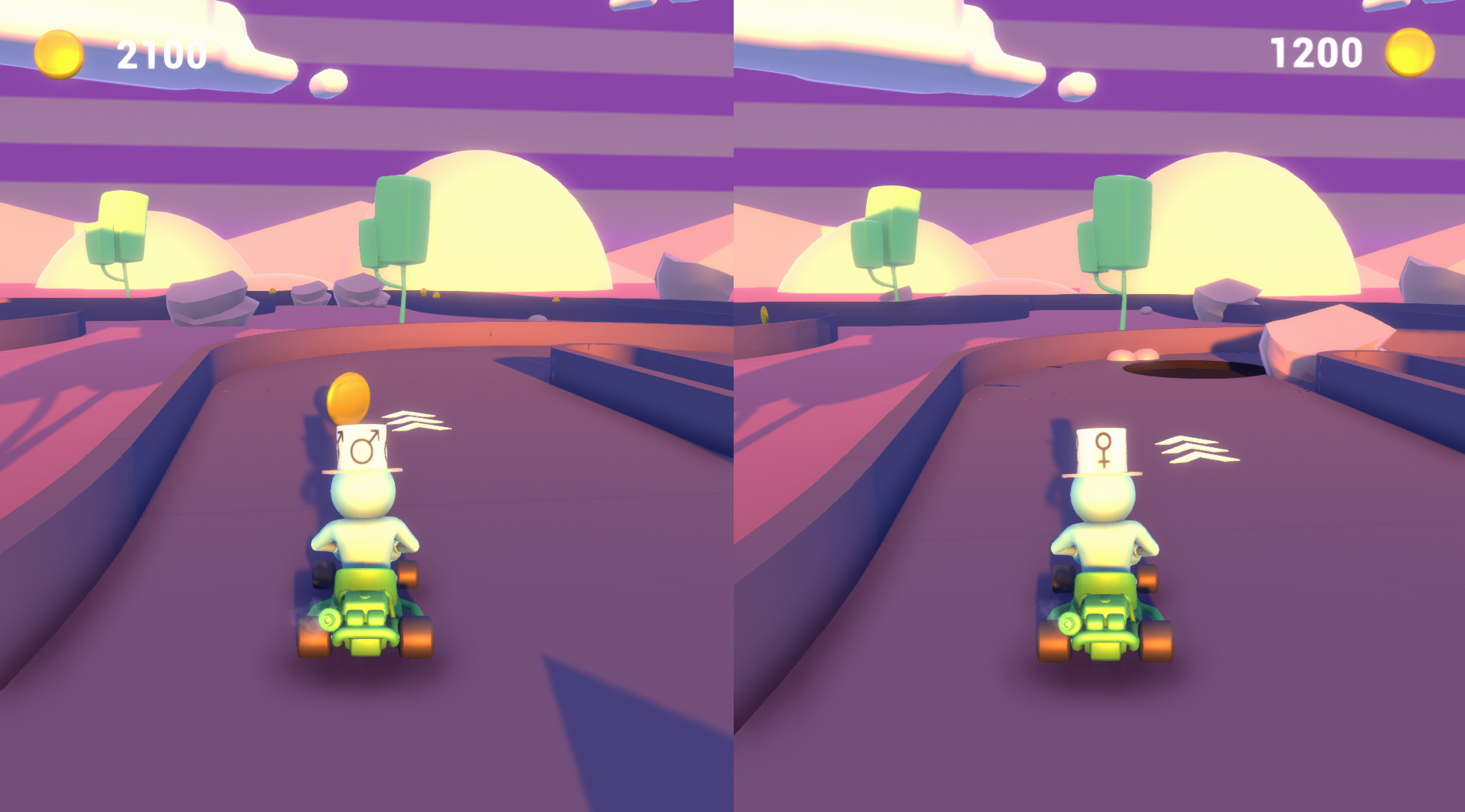
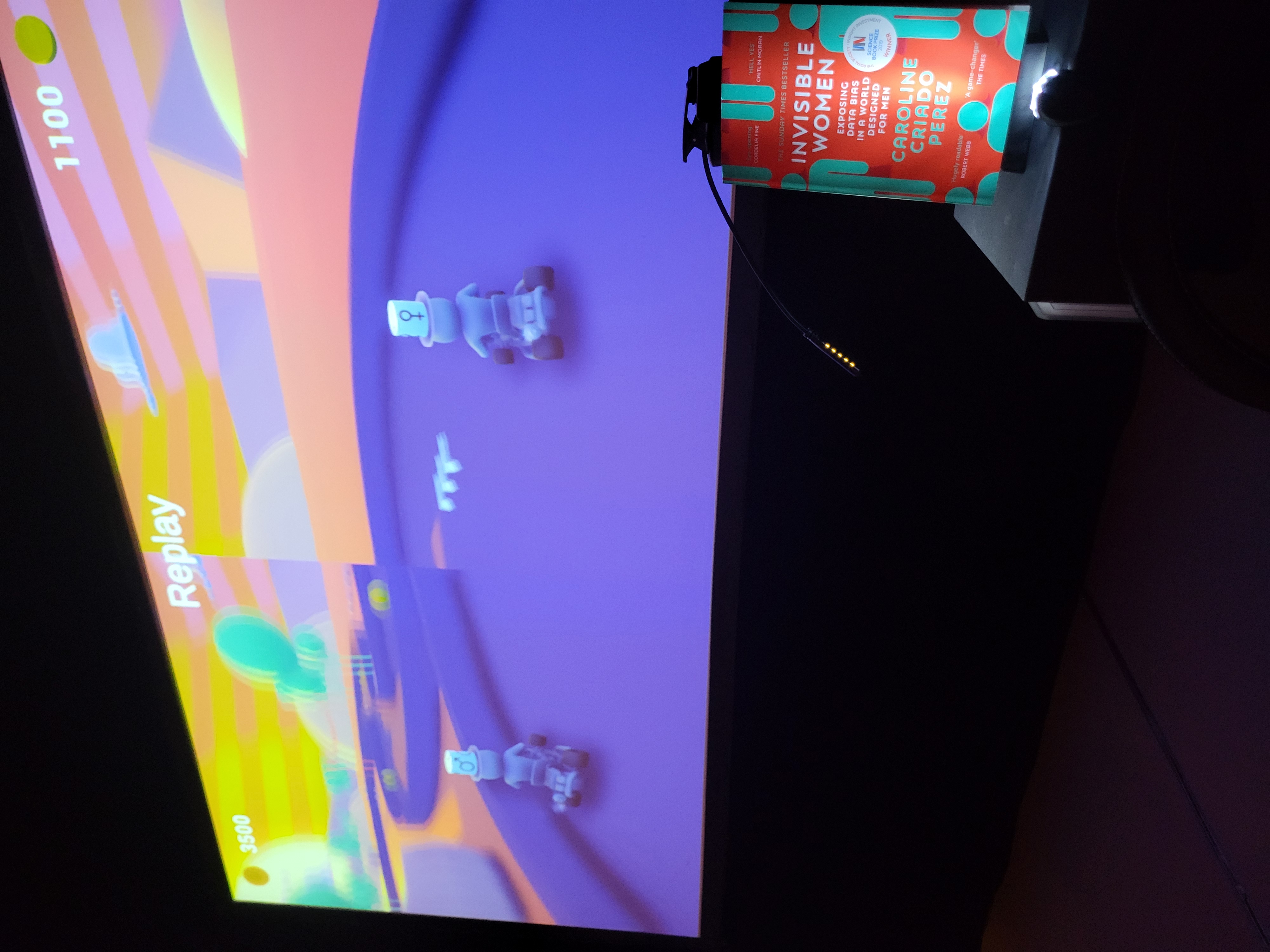
Women have often been left out of research. Scientists thought hormonal cycles made women too difficult and expensive to study. As a result, many studies only include the average male. This has led to knowledge gaps and great risks for women, especially in the context of health and medicine. To address this, we built a multiplayer racing game called "Formula 1mpossible". Two players race on different tracks. The male track is smooth and easy, while the female track contains gaps and obstacles. Players collect money for research. The male character starts with more money and can collect more, whereas the female character starts with less and loses money when falling into gaps. Each fall triggers a pop-up message about real-world gender bias in research.
The Experience
During the exhibition, visitors could play the game and experience the difference between the tracks. The person playing for the male character often finished much earlier. This gave them time to look at the female player's screen and start realizing the game was unfair. People watching could also already see the difference. The person playing as the female character often noticed the other player was already done while they were still struggling. In the end, after both players finished, the game showed a replay to make the unfairness even clearer and to explain the issues women face in research.
A replay example of the game can be seen below.
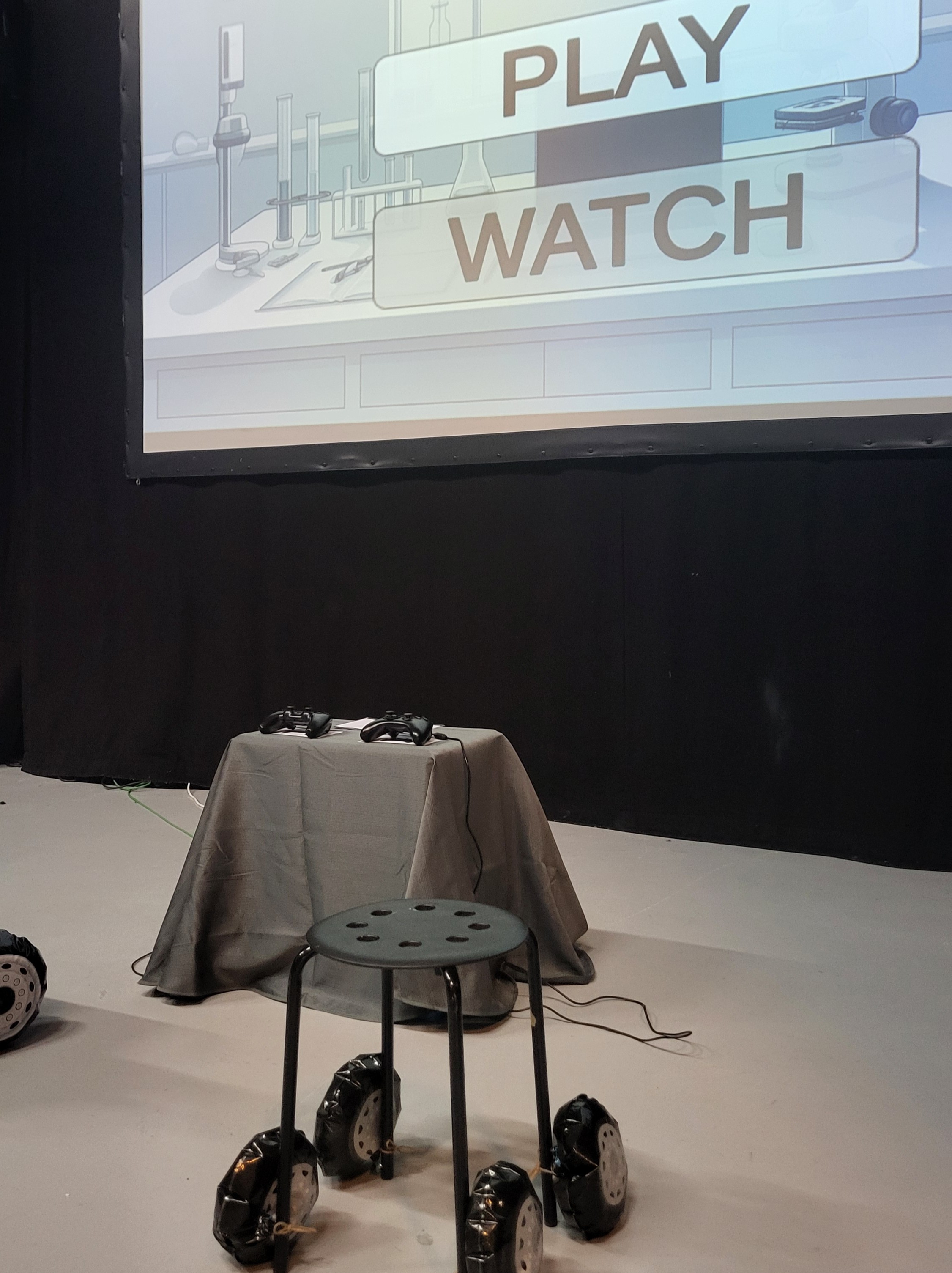
To add to the aesthetics and theme of our project, players who played as the female character had to sit on a more uncomfortable stool than the players who played as the male character. Both players had a basic game controller to control the game.
What we told visitors
Before playing:
- Take a seat.
- You are going to do research. For doing research, you need funding.
- You will race to collect money for your research.
- The goal is to collect as much money as possible.
- This is how the controls work.
After the race:
- Well done!
- Did you notice anything different between you two?
- The gaps on the track represent real research gaps in female health research.
- The player playing as the female character chose to include female data in their research. However, research like this often struggles to get funding or is seen as too expensive because of hormonal cycles.
- The player playing as the male character chose to include only male data, making the research and funding process easier.
Finally, we had a discussion with the visitors and talked about the consequences of the existing data gaps.
You can find our project paper here. The pop-ups in the game were from real-world research and these statements (with references) can be found in the report.
Tools, Materials, and Development
We used the following materials to create and set up our project:
- The game was built in Unity version 2020.3.18f
- FPS Microgame template: used for basic animations and the 3D objects. We implemented the game mechanics (e.g. gaps, pop-ups, split-screen, multiplayer) ourselves.
- Nintendo Switch Pro Controllers: used for player controls during the exhibition.
- Crates and a tablecloth: used to build the table where papers and instructions were placed.
- Laptop: inside the crate to run the game in Unity.
- Two chairs with inflatable wheels: different chairs were used to symbolize the inequality between players.
- Book "Invisible Women" by Caroline Criado Perez: displayed to provide context and inspiration for the project.
- Reading light: positioned above the book for better visibility.
- Pole with bookstand: used to present the book upright next to the setup.
- Projector and projection screen: used to project the game and the replays for the audience.
- Speaker: for the audio and sound effects.